
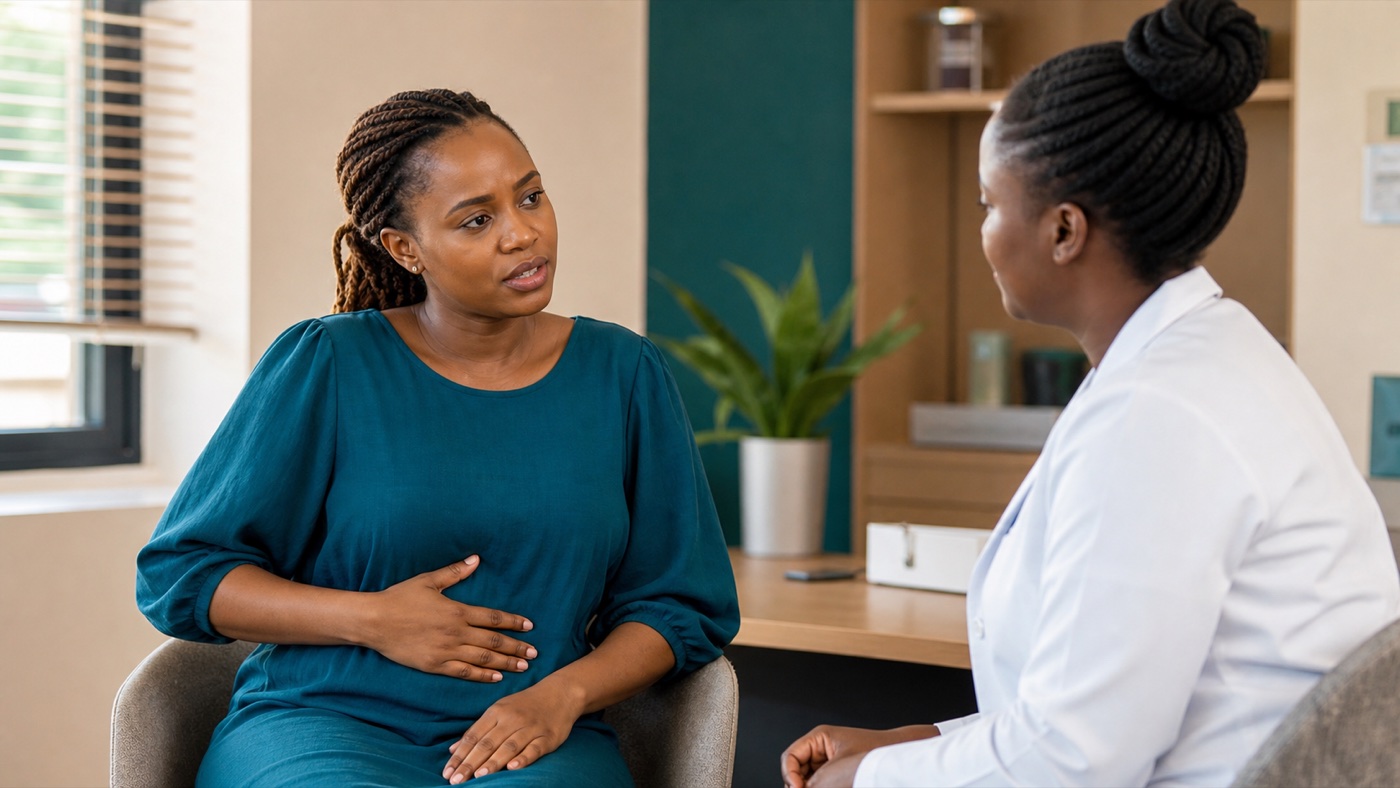
Pelvic pain may come from reproductive, urinary, bowel or musculoskeletal conditions, and more than one factor can be present.
What to know
Possible causes include period pain, ovulation, infections, ovarian cysts, endometriosis, fibroids, urinary or bowel problems and pregnancy-related conditions.
Because symptoms overlap, self-diagnosis is unreliable. A clinician may use history, examination, pregnancy testing, laboratory tests or imaging.
Key points
Describe the patternNote onset, location, timing and triggers.
Relate it to your cycleTrack bleeding and cycle timing.
Notice associated symptomsFever, discharge, urinary or bowel changes matter.
Record what helpsInclude medicines and their effect.
Signs and symptoms
Pelvic pain may be sudden or chronic, constant or intermittent, and related—or unrelated—to periods, sex, urination, bowel movements or movement.
Pain pattern
Location, onset, severity, radiation and timing help narrow possible causes.
Bleeding or discharge
Abnormal vaginal bleeding, unusual discharge or odour can point toward gynaecological or infectious causes.
Urinary or bowel symptoms
Burning, frequency, blood in urine, constipation, diarrhoea, bloating or pain with bowel movements may be relevant.
Pregnancy-related warning signs
Pain with a positive pregnancy test, missed period, faintness, shoulder-tip pain or bleeding requires urgent assessment for ectopic pregnancy.
Causes and contributing factors
Pelvic organs share nerve pathways, so reproductive, urinary, bowel, muscle and nerve conditions can feel similar.
Gynaecological causesOvulation pain, period pain, ovarian cysts, fibroids, endometriosis, adenomyosis, pelvic infection or ovarian torsion are possibilities.
Pregnancy-related causesEctopic pregnancy, miscarriage and other pregnancy complications must be considered when pregnancy is possible.
Urinary and bowel causesUrinary infection, stones, irritable bowel syndrome, constipation, appendicitis and inflammatory conditions can cause pelvic pain.
Musculoskeletal and nerve painPelvic-floor muscle tension, abdominal-wall pain, hip or back conditions and nerve irritation may contribute.
How healthcare professionals assess it
Assessment is individual. Not every person needs every test, and results must be interpreted alongside symptoms, history and examination findings.
Urgency and pregnancy check
Vital signs and pregnancy testing are priorities for sudden or severe pain.
Focused history and examination
A clinician evaluates timing, location, bleeding, discharge, sex, urinary and bowel symptoms and performs an appropriate examination.
Laboratory tests
Urine, STI tests, blood counts or inflammation tests may be used depending on the presentation.
Imaging
Pelvic ultrasound is common; CT, MRI or other tests may be needed for non-gynaecological or complex causes.
Treatment and management
Treatment must address the cause. Strong pain relief alone should not delay assessment of urgent conditions.
Emergency treatment
Ectopic pregnancy, ovarian torsion, appendicitis, severe infection or internal bleeding need urgent hospital care.
Medicine
Pain relief, antibiotics, hormonal treatment or bowel and bladder treatments may be used after appropriate assessment.
Physical therapy
Pelvic-floor or musculoskeletal therapy can help selected chronic pain patterns.
Multidisciplinary care
Persistent pain may benefit from gynaecology, gastroenterology, urology, pain, mental-health and physiotherapy input.
Practical steps you can take
Record when pain starts, where it is, what triggers it and associated bleeding, discharge, urinary or bowel symptoms.
Use a pregnancy test promptly when pregnancy is possible.
Avoid repeatedly self-treating severe or unexplained pain without assessment.
Bring a medicine list and previous scan or operation reports to appointments.
Seek support for sleep, sexual wellbeing and mental health when chronic pain affects daily life.
Questions to ask at an appointment
Writing questions down can make a consultation more useful, especially when symptoms are stressful or complex.
- What urgent causes have been considered or ruled out?
- Could the pain come from the bowel, bladder, muscles or nerves as well as reproductive organs?
- Which test is most useful now, and what would a normal result mean?
- What is the plan if pain continues despite initial treatment?
Common questions
Can ovulation cause pain?
Some people feel short-lived one-sided pain around ovulation, but severe, persistent or unusual pain should not be assumed to be ovulation.
Can a normal ultrasound explain all pelvic pain?
No. Some causes are not visible on ultrasound, and bowel, bladder, muscle or nerve causes may need different assessment.
When is pelvic pain an emergency?
Seek urgent care for sudden severe pain, fainting, pregnancy possibility, shoulder-tip pain, heavy bleeding, fever, persistent vomiting or a rigid abdomen.
When to speak with a healthcare professional
Arrange an assessment if symptoms concern you, affect daily life, persist, worsen or are different from what is normal for you.
Pain is sudden, severe or worseningContact a qualified healthcare professional for individual assessment.
You may be pregnant, feel faint or have shoulder-tip painContact a qualified healthcare professional for individual assessment.
Pain occurs with fever, vomiting or heavy bleedingContact a qualified healthcare professional for individual assessment.
This guide is educational. It does not diagnose a condition or replace care from a qualified healthcare professional.
Medical references
This guide was prepared from authoritative public-health and professional medical resources.
Have questions about this topic?
Discuss your symptoms, history and next steps privately with Dr. Benny.